Commercial Roof Coatings and Restoration in Shreveport, LA
Call and we will connect you with an independent local provider.
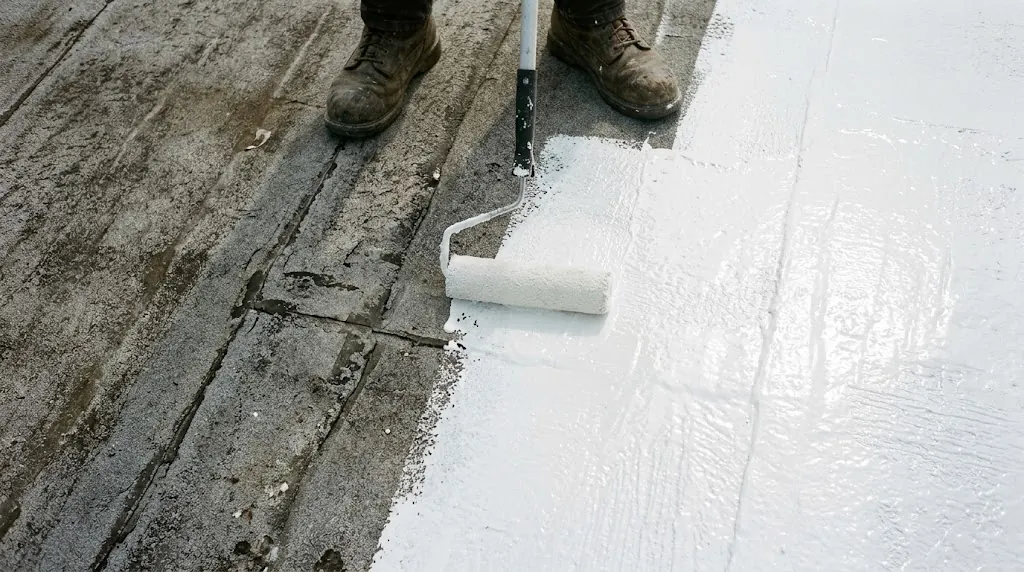
CALL NOW: (318) 287-8236A coating restoration is a liquid-applied system rolled or sprayed over an existing roof to form a seamless, reflective surface. On the right building it can add years of service for a fraction of what a tear-off costs. On the wrong building it wastes money. Call (318) 287-8236 and we will connect you with an independent licensed commercial roofing contractor who can tell you which one you have. Shreveport Commercial Roofing Pros is a referral service and does not apply coatings.
Is your roof a coating candidate?
Contractors and coating manufacturers generally look for a few things:
- Mostly dry insulation. A coating seals the top of the roof. If large areas underneath are wet, the moisture stays trapped. An infrared or capacitance moisture survey, or core cuts, shows how much is wet; wet areas are cut out and replaced before coating.
- A sound deck. Coatings do nothing for rusted-through steel or rotted wood.
- A compatible substrate. Coatings are used over TPO, EPDM, modified bitumen, built-up roofs, metal and spray foam, but each needs specific cleaning and primers. Ask what the manufacturer requires for your roof type.
- Remaining life. A roof that is worn but intact restores well. One that is falling apart is a replacement.
Silicone versus acrylic
Silicone
Silicone tolerates standing water better than most other coatings, which makes it a common choice for flat roofs with some ponding. It holds up well to UV exposure. Downsides: it tends to pick up dirt, which lowers reflectivity over time; it can be slippery when wet; and in general only silicone sticks well to silicone, which matters for future recoats and repairs.
Acrylic
Acrylic is water-based, usually less expensive and very reflective. It is a frequent choice on metal roofs and sloped surfaces that drain well. It does not tolerate ponding water as well as silicone, and it should not be applied when rain or dew is expected before it cures, which is a real consideration on humid Louisiana evenings.
Other chemistries exist, including urethanes and hybrid systems. A contractor should explain why a particular product fits your roof rather than offering one coating for every building.
What a restoration project looks like
- Survey. Moisture testing and an inspection of seams, flashings, drains and penetrations.
- Repairs. Wet insulation removed and replaced, seams and flashings repaired, metal fasteners replaced where needed.
- Cleaning. Power washing and, on some roofs, a cleaner to remove chalking, oils and dirt. Coatings fail when the surface is not clean.
- Primer and detail work. Primer where required, then reinforced coating or fabric at seams, penetrations and transitions.
- Base and top coats. Applied at the thickness the manufacturer specifies. Ask how dry film thickness will be checked; wet-film gauges and core samples are common methods.
Typical coating cost ranges
National consumer cost guides list the installed coating material and labor alone in the ranges below. Commercial projects that need moisture surveys, wet insulation replacement, extra repairs, reinforced details or thicker manufacturer-warranted builds often cost more than these figures. Treat them as budgeting starting points only.
| Coating | Typical national-guide range (installed) |
|---|---|
| Acrylic coating | About $0.65 to $1.75 per sq ft |
| Silicone coating | About $1.50 to $2.50 per sq ft |
| Prep, repairs and wet insulation replacement | Added on top, priced after inspection |
| Full replacement, for comparison | Often several times the cost of a coating |
Compare the coating proposal against a replacement proposal on a cost-per-year basis, not just the total. See our cost guide.
Timeline and weather
Many restorations run from a few days to two or three weeks depending on roof size and how much repair work comes first. Coatings need dry surfaces and minimum temperatures, and many have a window after application during which rain or dew can damage the film. In the Shreveport area, that means watching the forecast closely in spring and on summer afternoons when thunderstorms build. Fall often brings steadier weather.
Coatings in Shreveport-Bossier: local specifics
Picking the window. The National Weather Service's Shreveport climate summary lists about 98 days a year with measurable rain, with May and June averaging more than 5 inches each and August under 3 inches. It also notes that about two-thirds of pre-dawn hours run at 90 percent humidity or higher, while more than half of mid-afternoon hours drop below 50 percent. In practice, coating crews here work late morning through afternoon, watch for evening dew, and often find late summer and fall easier than spring.
Common candidates. Metal shops and warehouses with sound panels, and older strip centers and office buildings with modified bitumen or built-up roofs that are worn but dry, are the usual restoration candidates around Shreveport and Bossier City.
Permits. Louisiana's Act 239 requires permits and inspections for roof construction and reroofing on commercial buildings. Whether a particular coating scope counts as reroofing is a question for the building official; ask the contractor to confirm with the Shreveport or Bossier City permit office, or the parish office, before work starts.
Utility incentives. SWEPCO's commercial efficiency program lists HVAC, lighting and similar measures, not roof coatings. Do not budget a rebate unless SWEPCO confirms one in writing.
Questions to ask before choosing a coating
- What did the moisture survey show, and how much wet insulation will be replaced?
- Which manufacturer and product, and is it approved for my roof type?
- What thickness will be applied, and how will you prove it?
- Is a manufacturer warranty offered, and what inspections does it require?
- How will future repairs and recoats work with this product?
- What happens if rain arrives before the coating cures?
Checking a contractor before you sign in Louisiana
- State license on larger jobs. The Louisiana State Licensing Board for Contractors (LSLBC) requires a commercial license for commercial projects valued at $50,000 or more, counting labor and materials. Roofing falls under the board's "Roofing and Sheet Metal, Siding" subclassification of Building Construction, and a contractor may also hold the broader Building Construction classification. Ask for the license number and look it up on the LSLBC website. A contractor's name on a truck is not proof of a license.
- Small apartment buildings. For buildings used mainly as residences with up to four units, the LSLBC says roofing work of $7,500 or more requires the Residential Roofing or Residential Construction classification as of August 1, 2026. Owners of duplexes and fourplexes should ask which license covers their job.
- Permits. The LSLBC says Act 239 of 2025 requires permitting and inspection of roof construction and reroofing on residential and commercial structures for projects beginning on or after August 1, 2025. Inside Shreveport the permit comes from the city's Division of Permits and Inspections at Government Plaza; in Bossier City it comes from the Permits & Inspections Division on Benton Road. Ask the contractor to pull the permit in the contractor's name and schedule the inspections. Our guide to commercial roof permits and codes in Shreveport and Bossier City has the details.
- Insurance. Request certificates for general liability and workers' compensation, sent straight from the insurance agent, not handed over as a photocopy.
- Everything in writing. System, thickness, insulation, attachment, flashing details, how hidden damage is priced, payment schedule, warranty terms and cleanup.
Curious whether your roof can be restored? Call (318) 287-8236.
Call and we will connect you with an independent local provider.
CALL NOW: (318) 287-8236Frequently asked questions
How long does a roof coating last?
It depends on the product, the thickness applied and the roof underneath. Manufacturers rate systems for different terms. Ask the contractor what the specified thickness is designed to deliver and what maintenance it needs.
Can you coat a roof that is leaking?
The leaks and any wet insulation need to be repaired first. A coating is not a patch for a failing roof.
Is silicone or acrylic better for a flat roof?
Silicone generally handles ponding water better. Acrylic is often chosen for well-drained and metal roofs. A contractor should recommend based on your roof's drainage and substrate.
Areas we serve
We connect callers across Shreveport, Bossier City, Haughton, Benton, Minden and Caddo, Bossier and Webster parishes, Louisiana, including:
- Shreveport
- Bossier City
- Haughton
- Benton
- Minden
- Greenwood
- Keithville
- Blanchard
- Stonewall
- Mooringsport
- Caddo Parish
- Bossier Parish
- Webster Parish
Local pages: Bossier City, Minden, Haughton & Benton.
Related services
- TPO Roofing
- EPDM Rubber Roofing
- Modified Bitumen & Built-Up
- Commercial Metal Roofing
- Roof Repair & Leak Detection
Call and we will connect you with an independent local provider.
CALL NOW: (318) 287-8236